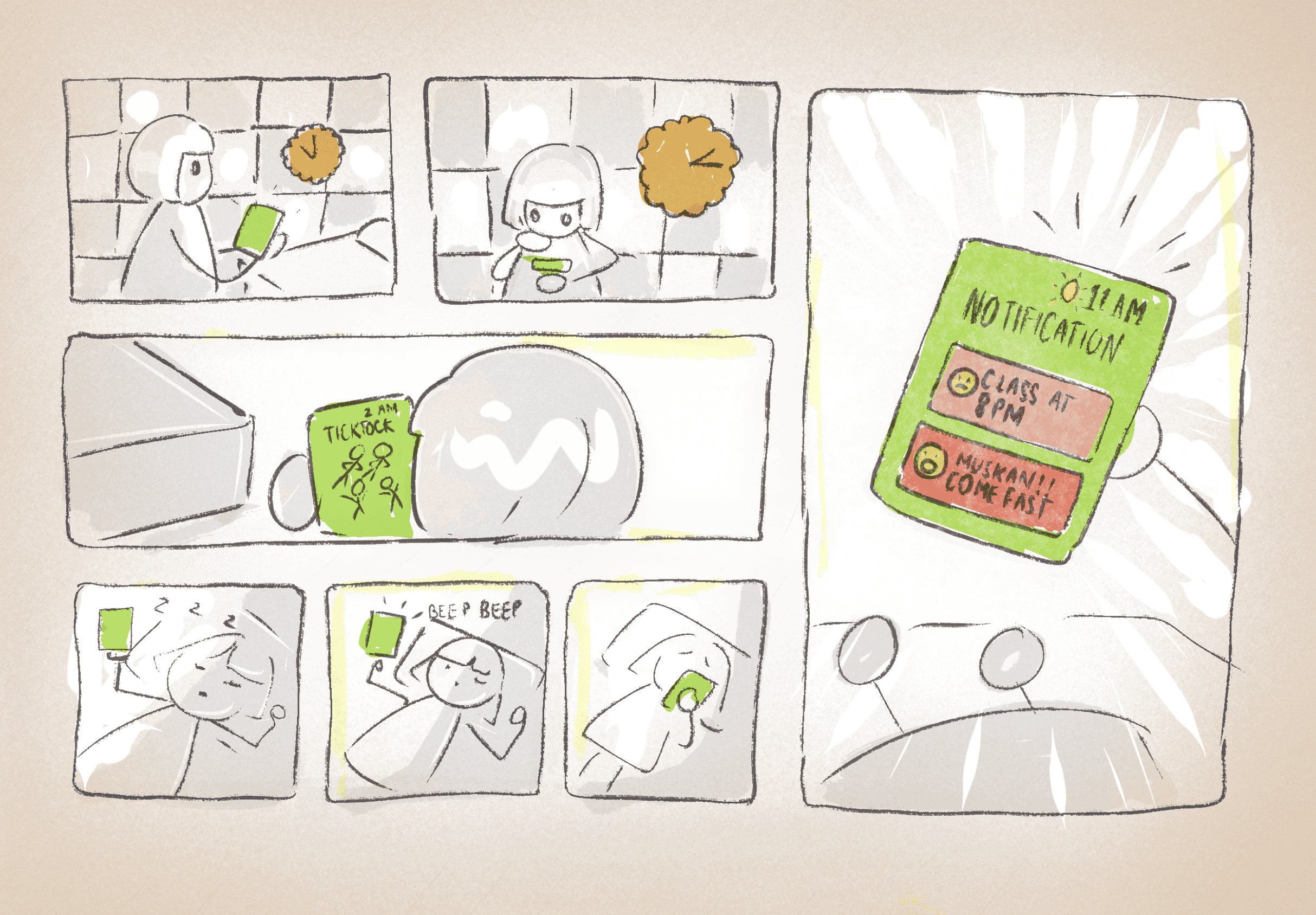
Digital Detox Solutions
Ginger - A Habit Building Application for IITH Students
Project
001
Digital Detox Solutions
Design Thinking Workshop
Tata Consultancy Services
To combat digital addiction, design and develop tools, apps or community initiatives that encourage balanced tech usage and promote offline activities and mindfulness.
What is Digital Detox
Period of time during which a person voluntarily refrains from using their electronic devices, such as smartphones and desktops, regarded as an opportunity to reduce stress or focus on social interaction in the physical world.
(Oxford Dictionary, 2019)
Info
002
Timeline
03 Days
Team
06 students
Tools
Fig Jam, Figma, Adobe Illustrator, Procreate
The Problem
004
Need for
Digital Detox
A digital detox is needed to reduce stress, improve mental and physical health, and boost productivity. It helps individuals disconnect from constant screen time, leading to better sleep, reduced anxiety, and fewer distractions. Additionally, it enhances relationships by encouraging face-to-face interactions and promotes a more balanced lifestyle by limiting digital dependency.
01
Mental Health
Reduces stress, anxiety, and improves sleep by cutting down on constant notifications and screen time.
02
Productivity
Minimizes distractions, enhances focus, and boosts creativity by breaking free from digital overload.
03
Physical Health
Reduces eye strain and encourages physical activity by limiting screen exposure.
04
Relationships
Improves communication and strengthens bonds by fostering more face-to-face interactions.
05
Mindfulness
Promotes living in the moment and appreciating the present by disconnecting from constant digital engagement.
06
Balanced Lifestyle
Helps regain control over technology use, leading to a more balanced and healthy life.
Discover
005
Insights from
Secondary Research
Our secondary research on digital detox solutions and institutional initiatives for university students revealed that while many tools, such as digital wellbeing apps, exist, they are largely ignored. Similarly, retreat centers are used more as vacation spots than for lifestyle change. University-led detox programs see initial interest, but participation drops sharply after a few weeks. Interestingly, policies like the Australian government’s “right to disconnect” show promise in promoting digital balance for employees.
01
Sustained Engagement
Future solutions need to focus on long-term habits rather than temporary fixes.
02
Overcoming FOMO
Addressing psychological barriers like FOMO is essential for lasting change.
03
Flexible Boundarie
Solutions should allow students to set custom digital limits tailored to their needs.
04
Everyday Integration
Micro-detox practices should be integrated into daily routines for lasting effects.
05
Community Involvement
Leveraging peer support could help sustain participation and commitment.



Interviews
006
Listening and Analysing words of our Primary Stakeholders
The key stakeholders for this project are divided into three groups:
Primary Stakeholders
Students of IITH - Bachelors, Masters, PHD and Research Assistants
Secondary Stakeholders
Student clubs, Parents & Faculty
Tertiary Stakeholders
Staff, admin & Non - IIT H friends
01
Digital Device dependency
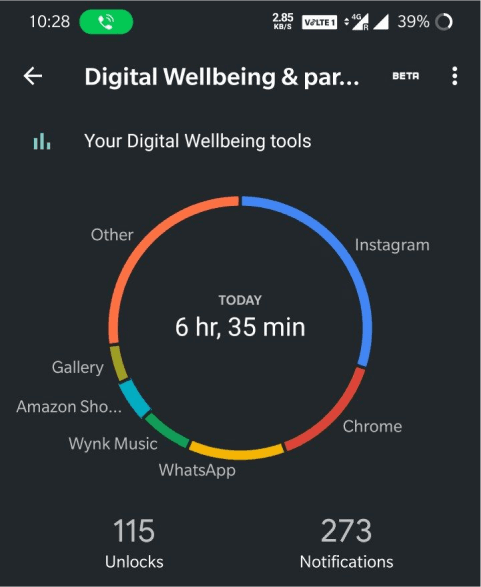
All the participants we interviewed rely heavily on their digital devices for daily activities, including academics, entertainment, socializing, communication, relaxation, and gaming. This leads to excessive screen time.
02
Contentment with High Usage
The majority of participants did not view high digital device usage (averaging 6-7 hours) as a problem, considering it a necessity for both productivity and daily tasks, including academic work.
03
Suggestions for digital detox
Most users suggested turning off notifications and using airplane mode to reduce screen time. Others recommended activities like reading in the library and engaging in real-life interactions to cut down on device usage.
04
Procrastination
Almost all participants reported experiencing doom scrolling or time blindness, leading to procrastination on important tasks like assignments due to excessive digital device usage.
05
Physical Effects
Excessive digital device use has led to issues like hunched backs, eye strain, headaches, sleep loss, increased eye power, and a more sedentary lifestyle, highlighting the physical toll of prolonged screen time.
06
Impact on Social Life
Increased phone usage has reduced face-to-face interactions for many, with some preferring online time over social activities.
07
FOMO on Social Media
Many users feel the need to stay constantly updated on social media, not willing to miss out on trends or events. This behavior often results in excessive screen time, increased anxiety, and distractions from important tasks.
08
Attitude Toward Detox
More than half of the participants were content with their high digital device usage and showed little interest in trying a digital detox, viewing their screen time as necessary for productivity and daily life.
User Personas
007
Painpoints
Empathy Map
Journey Map
Painpoints
Empathy Map
Journey Map
Painpoints
Empathy Map
Journey Map
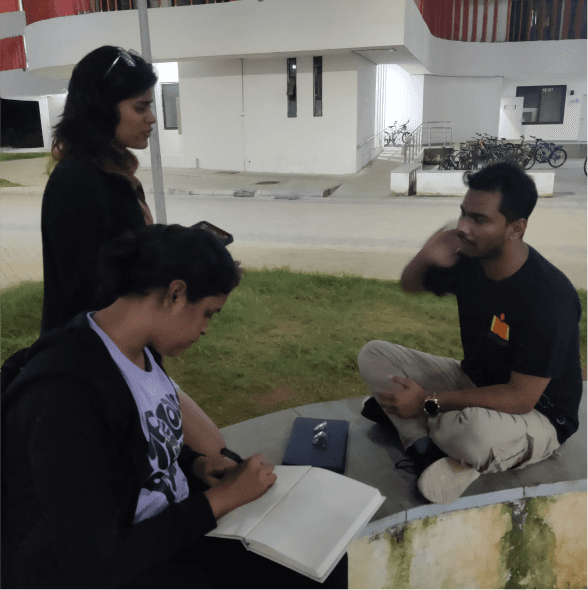
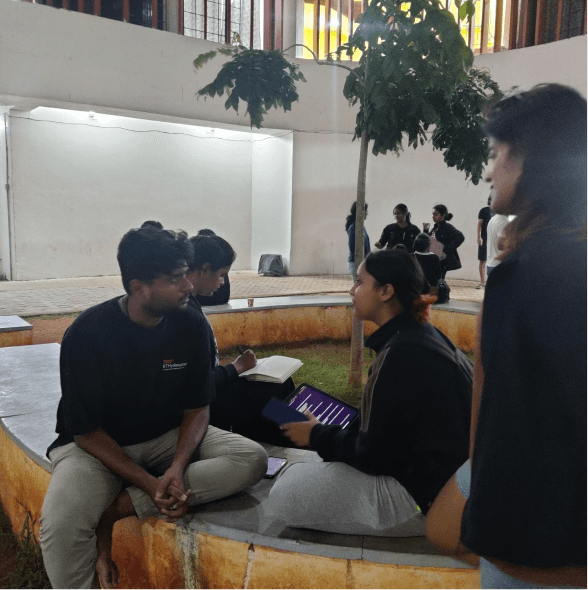
Illustration made by Hinoka
Design Drivers
008
01
Awareness and
Realization
How might we help students recognize the signs of digital addiction early?
02
Education and
Long-term Impacts
How might we educate students on the long-term impacts of excessive screen time on mental health?
03
Balancing Digital and Real-Life Interactions
How might we help students create a sustainable balance between digital activities and real-life interactions?
04
Reducing FOMO and Dependency
How might we reframe digital detox as a trend that students want to follow?
05
Breaks and Mental
Health
How might we offer alternatives to screen-based relaxation methods?
06
Interactive and In-Person Activities
How might we create interactive games or challenges that encourage students to meet offline?
Ideating
009
Conversing research to tangible Ideas
After completing our research and interviews, we began transforming insights into tangible and intangible ideas, exploring various possibilities to address user concerns. We conducted a MoSCoW analysis to prioritize essential features for our product, followed by idea affinity mapping to identify which features would create the greatest impact and drive meaningful change.
Idea Affinity Mapping
Must Have
01 - Habit Building Features
02 - Incentives
03- User Education about the need for Digital Detox
04 - Timely Breaks
05 - Promotion of In person interaction
Should Have
01 - Social Sharing Features
02 - Ways to Reduce FOMO
03- Creative and Fun Breaks
04 - Self-Assessment Tools
Could Have
01 - Non-Digital Hobby Promotion
02 - Influencer Partnerships & Trend Creation
03- In person interaction
Would Have
01 - Comprehensive Blocking of Digital Access
02 - Full Automation of Digital Detox
03- External Sponsor Rewards

Haptic Ring
A wearable device that nudges the users to take breaks after surpassing their timely limits

Alerting Furniture
A furniture which makes the user slightly uncomfortable after sitting for a very long time.

Habit Building Application
An application integrating Habit building features to bring about changes in IIT H students.
Deliver
010
Ginger
A Habit Building Application
Why another application?
The wellness app reaches a broad audience instantly, leveraging users’ digital habits to encourage healthier screen use. It offers small rewards to boost participation while being cost-effective for campuses. With multi-device syncing, it ensures a seamless experience across the various devices commonly used on campus, creating a more comprehensive solution.
When to Onboard the student?
When students join IIT Hyderabad, they enter a pivotal phase of their lives. To support their well-being, making a habit tracker mandatory, similar to other essential apps like ERP, should be part of the onboarding process. This would ensure students develop healthy routines, fostering long-term benefits.
Onboarding
011
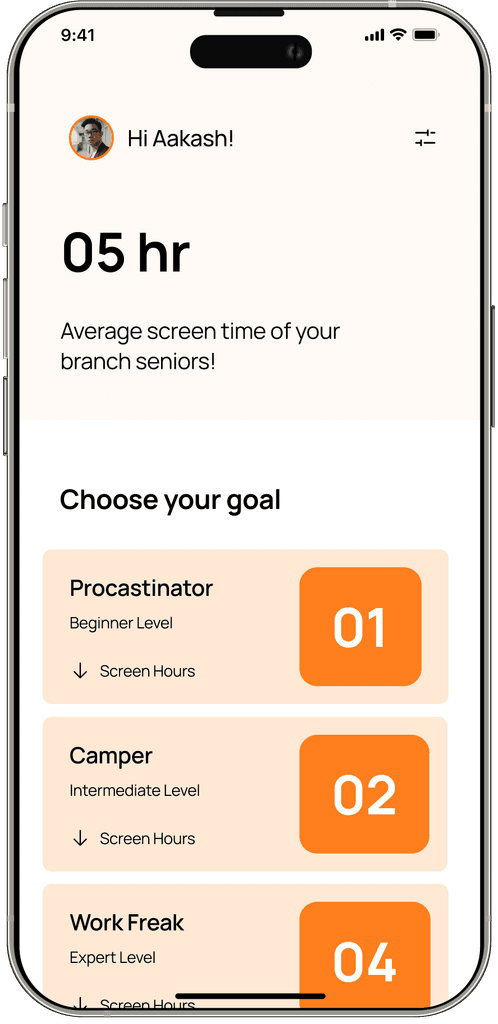
Making students realize their daily digital useage
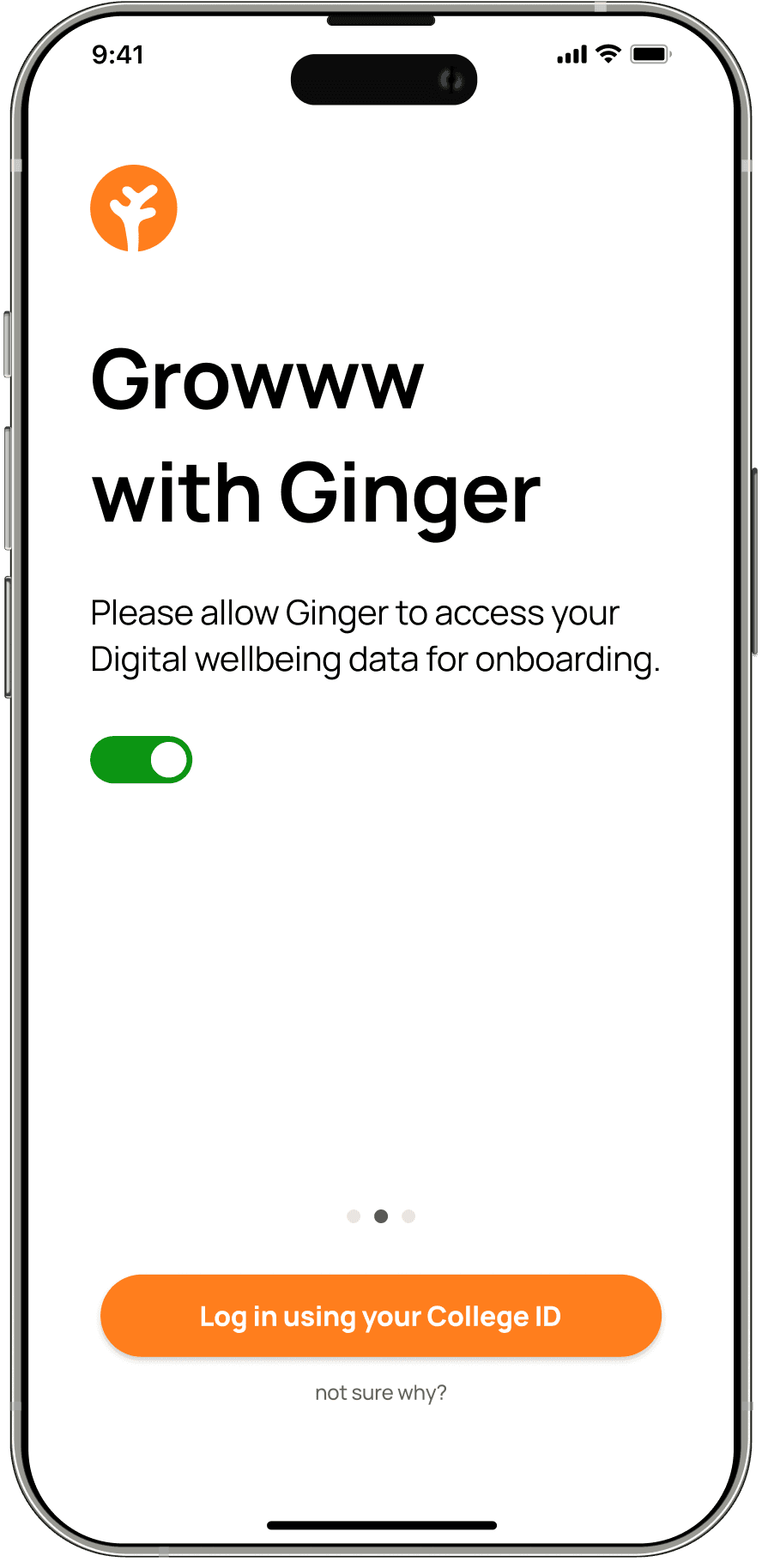
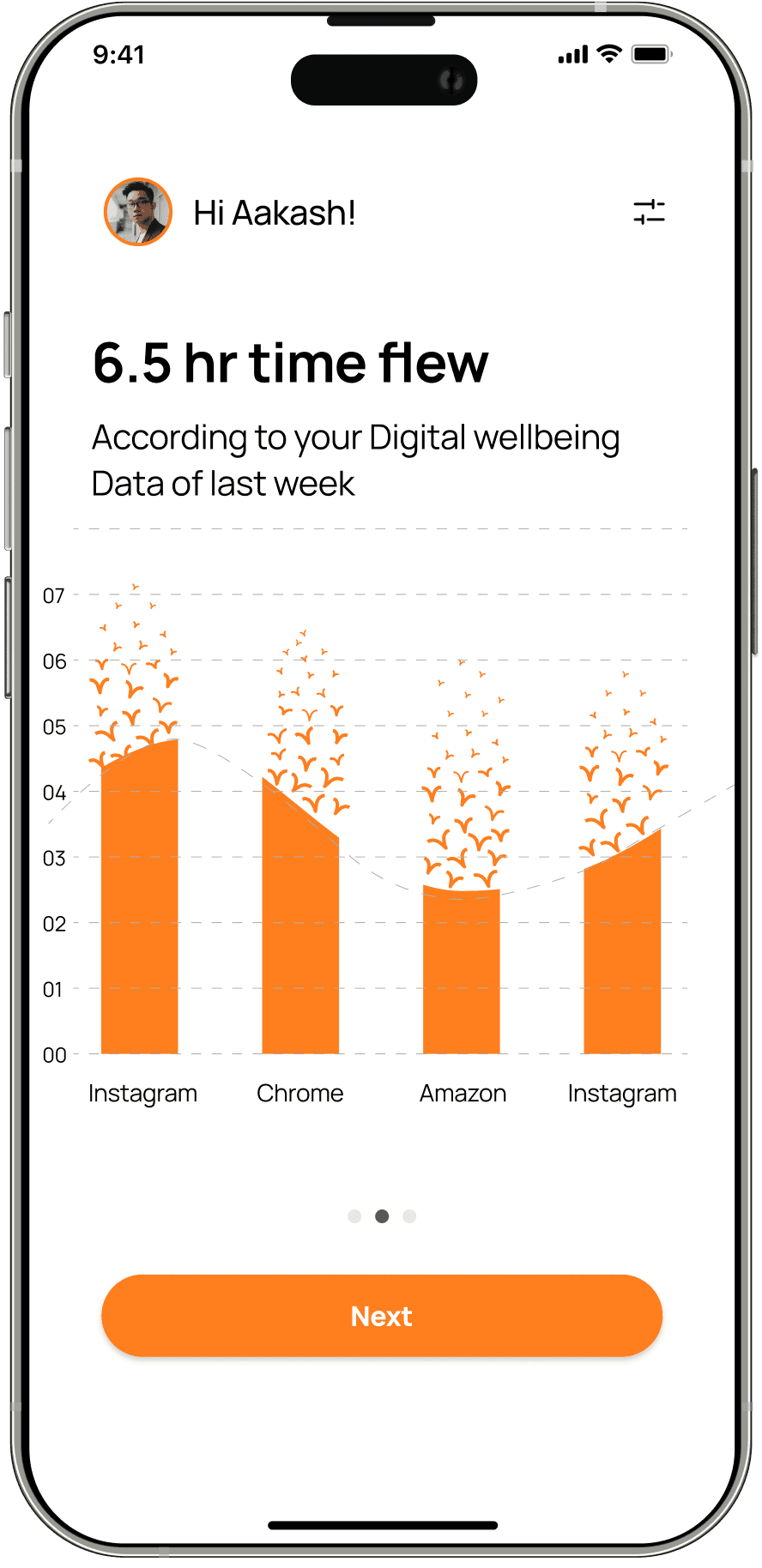
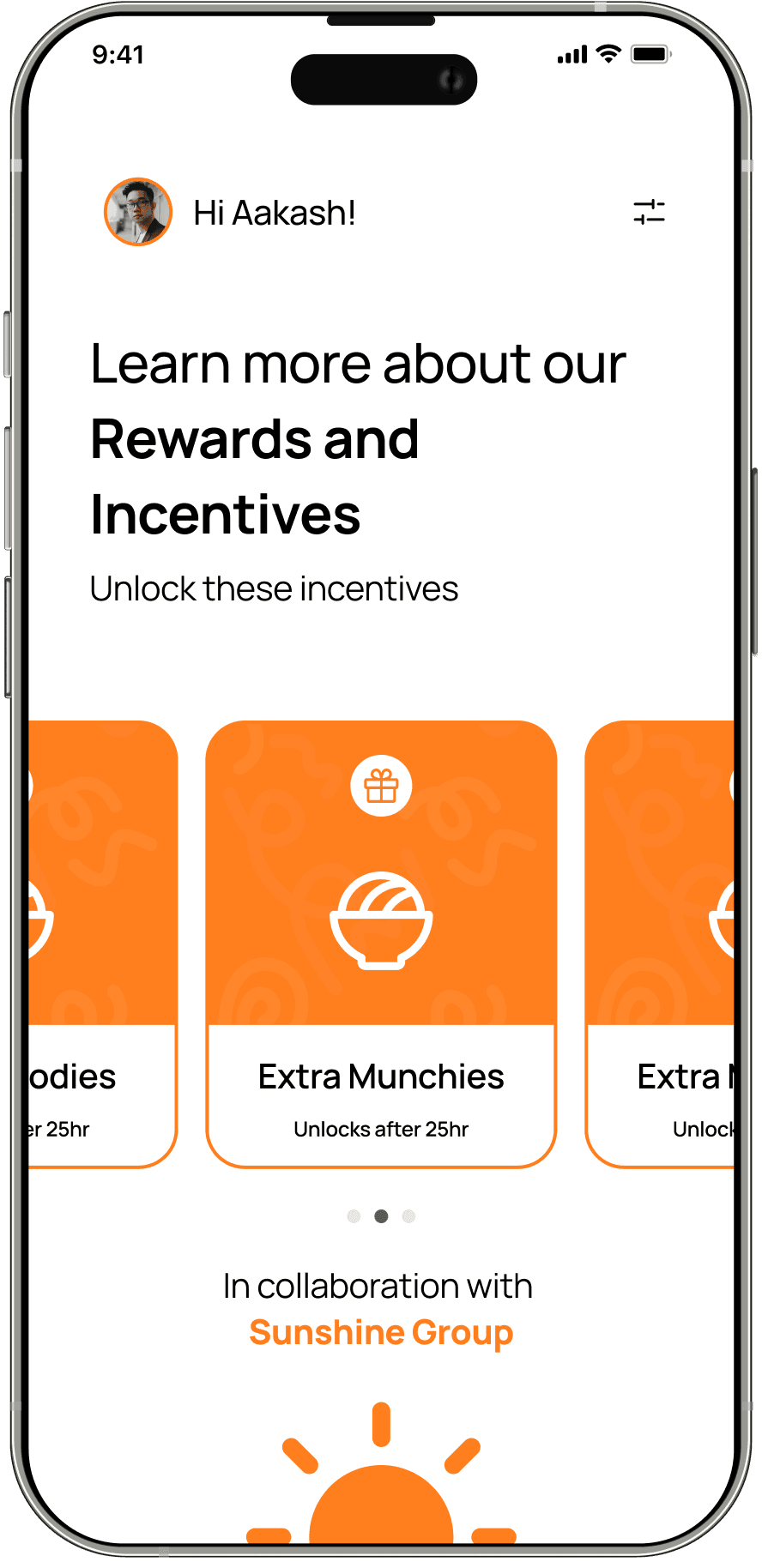
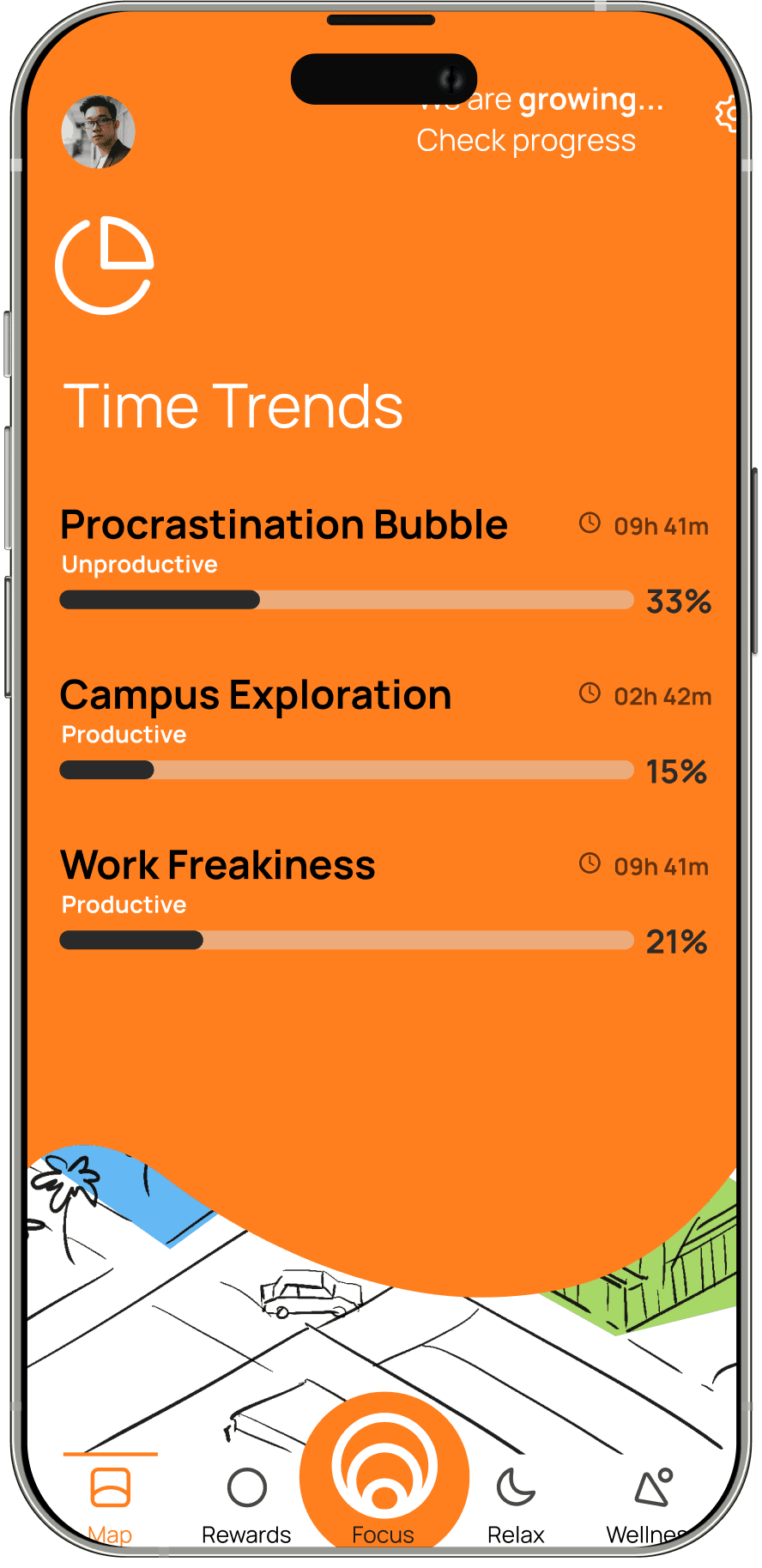
Upon onboarding through their institute email, the app gathers information about the student’s course and stream. It then requests permission to access the student's digital wellbeing data. Once granted, the app compares the student's daily screen time across devices with others in their stream. Based on this, the app offers rewards for effectively reducing screen time. Developed under IIT Hyderabad's Sunshine Club, which promotes mental health and well-being, the app aims to create a healthier digital lifestyle for students.
Customisation
012
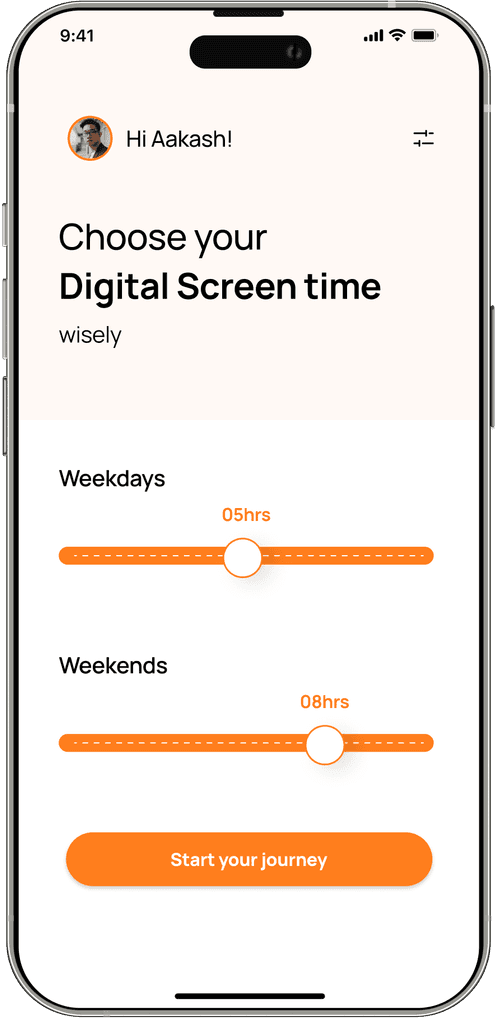
Allowing students to customise and choose their goals
The app offers customization and goal selection features, allowing students to set personalized goals for improving their daily lifestyle. They can adjust their screen time restrictions based on weekdays and weekends, ensuring a balance that fits their routine. This flexibility helps students take control of their digital habits, making the app adaptable to individual needs while promoting healthier usage patterns.
Onboarding
013
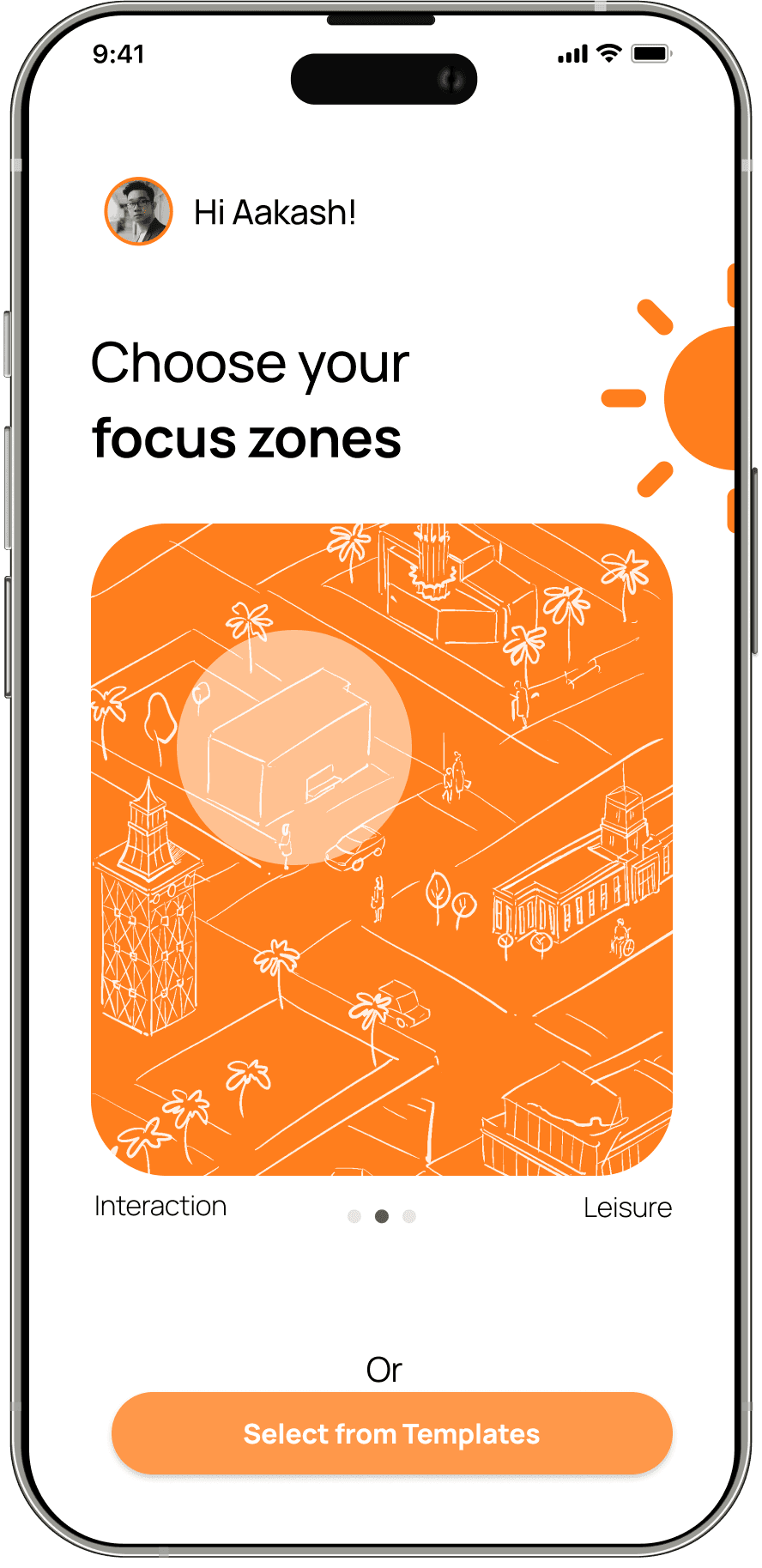
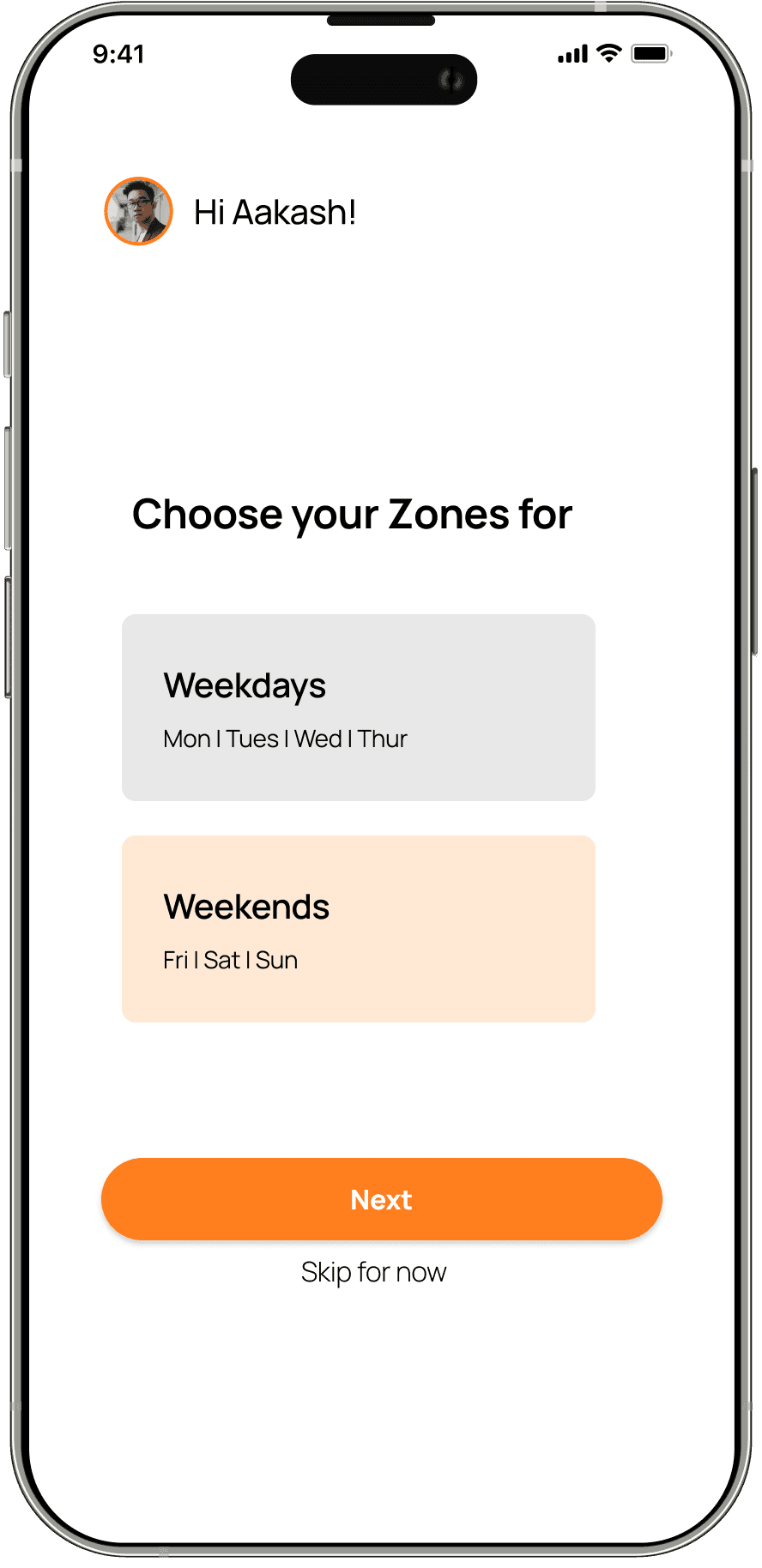
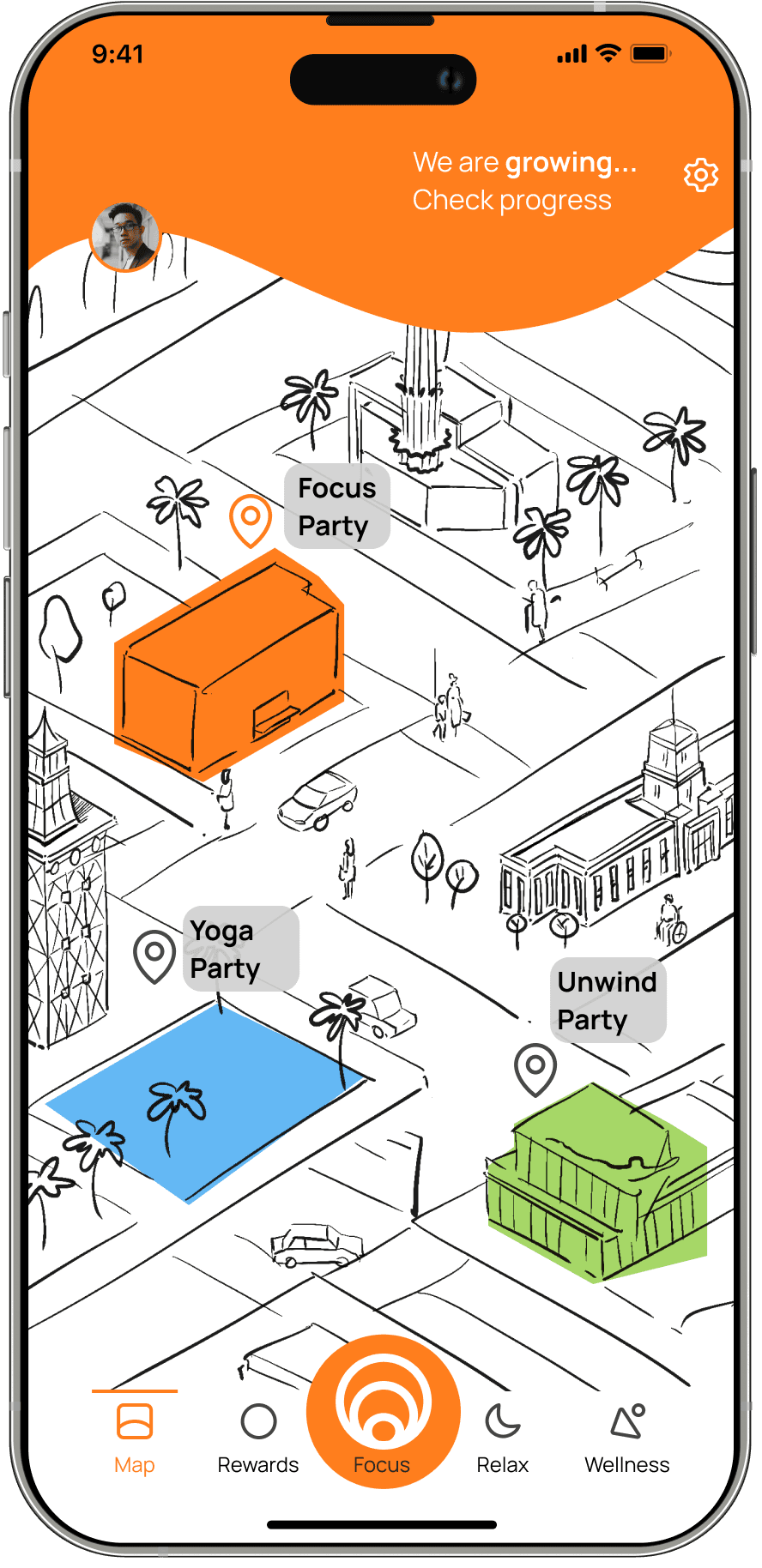
Personalized Focus Zone mapping around the Campus
The app provides a highly customizable experience, allowing users to create and adjust zones according to their preferences. As users enter different zones, the app automatically restricts or grants access to specific apps, making it easy to manage screen time. Each zone comes with customizable restrictions, tailored to the user's needs, giving them full control over their digital environment and ensuring that the app adapts seamlessly to their lifestyle and goals.

That’s Enoughhh.
When the student finishes their daily screen time Ginger pops up to remind the student.

My Eyes, my Eyessss!
If the student has ignored continous reminders of breaking away from the screen. Ginger pops up .

Take a quick break..
Ginger pops up on the screen to let the student know its time to break away from the screen.
Learnings
014
Takeaways from the project
This project has been a significant learning experience for me, both personally and professionally. From balancing time and managing tasks across multiple projects to working on something I deeply relate to as a student of IIT Hyderabad, it provided valuable insights. Below are some key takeaways from this journey:
01
Time Management
Managing multiple tasks while transitioning from project to project was challenging but rewarding. This experience taught me how to prioritize and organize my time better, much like in a real-world work environment where multitasking is crucial.
02
Collaboration
Working in a group project highlighted the importance of clear communication and teamwork. We had to constantly ensure that we were aligned, which made me appreciate the value of collective effort in achieving meaningful outcomes.
03
Connecting with the Project's Purpose
As an IIT Hyderabad student, I found myself personally invested in this project. The focus on mental health and digital wellness is something I could relate to, making the work more impactful and motivating me to give my best.
04
Real-World Impact
Our pitch to the Sunshine Club after the workshop was a pivotal moment. Seeing their enthusiasm for the idea and receiving an invitation to collaborate with the development team was inspiring. It gave me confidence that the work we are doing can have a real, positive impact on students' lives.
05
Design Thinking Techniques
Thanks to the TCS team, I was exposed to various design thinking methods that helped me approach the project more creatively. Understanding how to apply user-centric design and problem-solving techniques has helped me grow as a designer, enhancing both my practical and conceptual skills.
Previous Project
Suzuki Logo Competition
Next Project
Unheard Children