Project
001
SAP Design Challenge 2024
Envisioning the Future of Higher Education in India
Winner
To conceptualise and design innovative solutions for the future of higher education in India, leveraging technological advancements and flexible learning formats to better serve future generations.
Info
002
Timeline
07 Days
Team
Utkarsh Verma, Devendra Kumar
Tools
Fig Jam, Figma, Adobe Illustrator
The Problem
004
Understanding the problem
The education system faces issues like career mismatches, outdated curricula, and a disconnect between academia and industry, leaving students unprepared for modern careers. Rote learning and limited faculty-industry collaboration contribute to confusion, highlighting the need for change in higher education.
02
Disconnect Between Academia and Industry
60% of graduates in India remain unemployed due to the lack of employable skills, despite a degree.
Source: AICTE Annual Report
03
Outdated Curriculum & Irrelevant Teaching Practices
IIT’s and various private universities reported that over 75% of students feel the curriculum they study is outdated.
Source: All India Survey on Higher Education
04
Rote Learning and Lack of Contextual Understanding
70% of college students in India find themselves in programs driven by memorization than by concept
Source: ASER Report
05
Disconnection between faculty and Industry
65% of Indian faculty members have little to no industry exposure, making it challenging for them to prepare students for the job market.
Source: CII survey
06
Career confusion faced by university students
73% of students pursued internships in a field different from their field of education.
Source: Internshala Report 2020
Discover
005
Solutions implemented till now around the globe
Our secondary research on digital detox solutions and institutional initiatives for university students revealed that while many tools, such as digital wellbeing apps, exist, they are largely ignored. Similarly, retreat centers are used more as vacation spots than for lifestyle change. University-led detox programs see initial interest, but participation drops sharply after a few weeks. Interestingly, policies like the Australian government’s “right to disconnect” show promise in promoting digital balance for employees.
02
Academia-Industry Collaboration
Co-op Programs & Internships: The U.S. and South Korea have fostered strong university-industry partnerships to ensure students gain hands-on experience during their studies.
03
Curriculum
Reforms
Modular & Interdisciplinary Learning: Finland’s phenomenon-based learning model encourages interdisciplinary projects to solve real-world problems.
04
Moving Away from Rote Learning
Project-Based & Critical Thinking Approaches: Finland, Singapore, and Sweden emphasize project-based learning, focusing on real-world challenges, creativity, and critical thinking.
05
Lifelong Learning & Upskilling
Lifelong Learning Initiatives: Programs like SkillsFuture (Singapore) and adult education programs in Denmark promote continuous learning, allowing individuals to upskill or reskill throughout their careers.
06
Technology and EdTech Integration
EdTech Platforms & Micro-Credentials: Countries like the U.S. and China have embraced MOOCs and EdTech platforms (e.g. Coursera, edX, XuetangX) to offer flexible learning options, certifications, and lifelong learning resources.

Interviews
006
Listening and Analysing words of our Primary Stakeholders
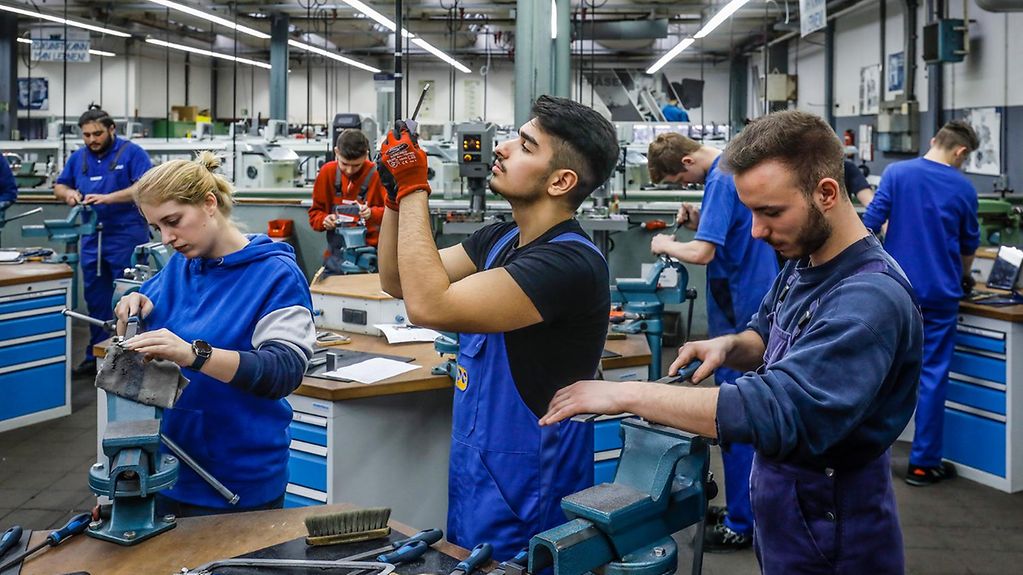
Due to a short deadline of the project we had discussions with other students and interviewed 11 students from IIT Hyderabad to understand their problems. Further, the key stakeholders for this project are divided into three groups:
Primary Stakeholders
Students
Education Institutes
Government Bodies
Secondary Stakeholders
Ed-tech Companies
Industries
Faculty
Tertiary Stakeholders
Parents
Tech-Infra Providers
NGOs
Alumni
02
Lack of Skill-Based Learning
"I wish we had more hands-on training and exposure to real-world applications."
03
Old Professor Syndrome
"Many professors have been teaching the same content for decades without updating it."
04
Future Shock
"With the rapid growth of technology, it's overwhelming to think about how quickly things are changing."
05
Obsolete Technology and Development
"We are being trained on software and equipment that companies don’t even use anymore."
06
No Annual Review or Check of Professors
"Professors are not held accountable for their outdated teaching methods or lack of development."
User Personas
007
Formulating user personas from our interviews
The personas for this project were carefully crafted to represent diverse backgrounds, including a rural student, an urban student, a working professional seeking continuous learning, and a physically disabled person pursuing education. In developing these personas, our primary focus was to ensure that the solutions are both inclusive and accessible to all, addressing unique challenges while eliminating any form of bias. By understanding the distinct needs and aspirations of these individuals, we aim to create a learning experience that is universally supportive and adaptable, fostering equal opportunities for every learner.
Ananya
18 year old student living in rural area of Uttar Pradesh
Ananya's Persona
Rahul
22 year old BTech student living in Mumbai with Parents
Rahul's Persona
Pooja
35 year independent married women at a managerial role.
Pooja's Persona
Amit
20 year old Physically disabled student in BTech
Amit's Persona
Define
008
Solutions implemented till now around the globe
Problem Statement
The current higher education system in India struggles to provide students with the flexibility, industry relevance, and personalized learning experiences necessary to prepare them for a rapidly evolving job market. The lack of early career guidance, rigid learning paths, minimal industry collaboration, outdated learning models, and inadequate support for lifelong learning leave students disconnected from practical, employable skills, and hinder their holistic development. Furthermore, accessibility and inclusivity remain challenges, preventing equal opportunities for all learners to succeed.
Design Driver
Create a dynamic, technology-driven educational ecosystem that provides personalized learning pathways, fosters continuous collaboration with industry, promotes inclusivity, and equips students with the skills and flexibility needed to thrive in an ever-evolving job market.
Design Approach
Based on our research findings we decided on categorized our ideas into the following:
02
Industry Collaboration is Essential
Establish regular feedback loops between industry professionals and academic institutions to keep curricula up-to-date and provide real-world projects as part of the learning experience.
03
Innovative Learning Models
Shift to project-based, interdisciplinary, and competency-based education, moving away from rote learning towards real-world application of knowledge.
04
Lifelong Learning is Crucial
Encourage continuous upskilling and lifelong learning through modular, flexible courses that students and professionals can take at any point in their career to stay relevant.
Reflection
009
Re-strategizing post Phase 01
After Phase 01, we realized we were rushing toward conclusions without fully understanding the students' needs. This led us to rethink our approach, grounding ourselves in the idea that "every student and their needs are different, so their education journey should be too." Embracing the cyclic nature of design thinking, we went back to the re-discover phase to better empathize with and design for students.
02
Re-emphasizing Empathy
Recognizing that "every student and their needs are different," we shifted our focus to understanding the unique educational journeys of each learner.
03
Re-thinking the Approach
This insight led us to revisit and refine our process, recognizing the need for a more tailored, personalized solution.
04
Design Thinking Cycle
As design thinking is iterative, we returned to the re-discover phase to ensure our solution addresses diverse student needs effectively.

Re-Discover
010
Every child is different, their needs are different why should their education journey be the same?
In today’s world, a standardized approach to education no longer meets the diverse needs of students. Every learner has unique strengths, aspirations, and challenges. Personalizing education allows students to unlock their full potential and follow a path that aligns with their individual goals and interests.
Re-Discover
011
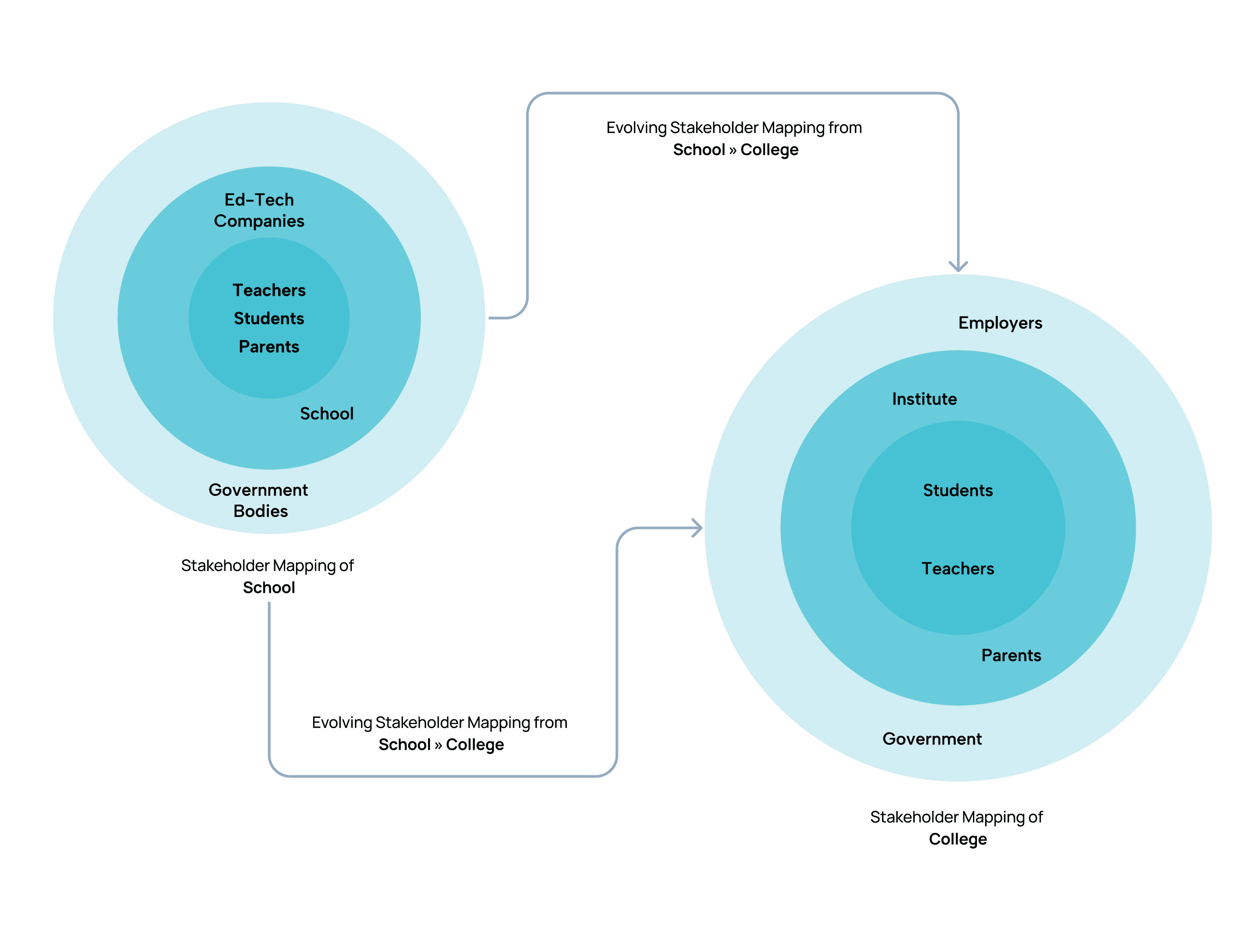
Redefined evolving
Stakeholder Matrix
We realized that to create a truly viable solution for the future of higher education, the stakeholder matrix must evolve alongside the student. In the early stages of education, parents often play the primary role in decision-making. However, as the student progresses, they take on more responsibility for shaping their own academic and career paths. This shift underscores the importance of designing an adaptable system that addresses the changing dynamics between students, parents, and other stakeholders over time.
Re-Discover
012
Insights from interview with Dr. Mukesh Pandey
Joint secretary, Uttarakhand board of tecninical education
To facilitate our re-discovery process, we conducted an insightful interview with Dr. Mukesh Pandey, the Joint Secretary at the Uttarakhand Education Board. During our discussion, we explored the recent developments introduced in the New Education Policy and gathered his perspectives on the future of higher education in India. His insights provided valuable context for understanding the evolving landscape of education and informed our approach to designing innovative solutions.
02
Data Analytics Tools
To track institutional performance, student success, and faculty effectiveness. Enable data-driven decision-making for administrative and academic improvements.
03
Virtual Labs
To provide remote practical learning opportunities for science and technical subjects. Students can conduct experiments in a virtual environment without the need for physical lab access.
04
Cloud-Based Student Information System (SIS)
Centralized platform to manage admissions, student records, attendance, grading, and fee collection.
05
Blockchain for Academic Credentials
Secure and streamline the issuing, storing, and verification of academic degrees and certificates, preventing fraud and making verification easier for employers.
06
AI-Powered Personalized Learning
Use AI to create personalized learning experiences for students based on their individual strengths and weaknesses, adapting course materials to their needs.
07
Virtual Reality (VR) and Augmented Reality (AR)
For immersive learning experiences, especially in fields like architecture, medicine, and history, allowing students to experience virtual simulations of complex concepts.
08
AI-Driven Administrative Tools
To automate routine tasks such as attendance tracking, grading, and scheduling, improving administrative efficiency.
Re-Discover
013
Harnessing Policy and Technology for Innovation
Through our research into India’s New Education Policy, we uncovered key opportunities in government-backed platforms like ABC and DigiLocker. These secure systems present the potential to revolutionize education by enabling personalization and efficiency. The question is: how can we leverage them to reshape the future of learning?
The following are How might we statements we made as our design drivers and way ahead:
Features of ABC
Features of Digilocker
02
Provide Career Guidance & Future Skill Development
How might we use AI to analyze market trends and suggest future skills or certifications that students will need to stay competitive in the evolving job market?
03
Achieve Inclusivity & Accessibility
How might we ensure the system is fully inclusive and accessible to students with disabilities, offering features like voice commands, screen readers, and sign language support?
04
Give Continuous Learning & Lifelong Education
How might we ensure that the system supports lifelong learning by allowing students to return to the platform at any stage of their life to continue accumulating credits, gain new skills, and receive career guidance?
05
Achieve Collaboration & Communication
How might we facilitate effective communication and collaboration between students, educators, parents, and mentors within the system to create a supportive learning ecosystem?
06
Get Credit Management & Document Integration
How might we integrate the Academic Bank of Credit (ABC) system into the system, allowing students to store, manage, and transfer credits seamlessly across institutions?
07
Achieve Stakeholder Engagement & Collaboration
How might we design the system to provide parents with real-time insights into their child’s academic progress and offer recommendations to guide them in making informed decisions?
08
Provide Government & Institutional Oversight
How might we enable institutions to use the system to analyze student performance data and improve their course offerings, ensuring continuous improvement in teaching quality and curriculum design?
Re-Define
014
Re-Defining key aspects and features of the solution
We utilized Idea Affinity Mapping to categorize our insights and performed a MoSCoW analysis to prioritize essential elements. This approach helped us identify which features were critical, such as personalized learning paths, integration of ABC and DigiLocker, and inclusivity for diverse learners. Through this process, we gained clarity on what the solution should consist of to create a more effective and student-centered experience.
Idea Affinity Mappping
MoScoW Analysis
Deliver
Introducing the future of Higher education
LMS - Learning Margdarshan System
Imagine an education system that evolves with you—tailored to your unique learning style, goals, and pace. Our AI-driven Learning Management System (LMS) takes education beyond the classroom, offering personalized paths, real-time feedback, and seamless integration with government-backed platforms like ABC and DigiLocker. It’s not just a tool—it’s a transformative journey designed to empower every student, no matter where they are or where they want to go. The future of learning is personal, flexible, and accessible for all.

Deliver
015
Introducing Professor and Effort V/s Impact Analysis
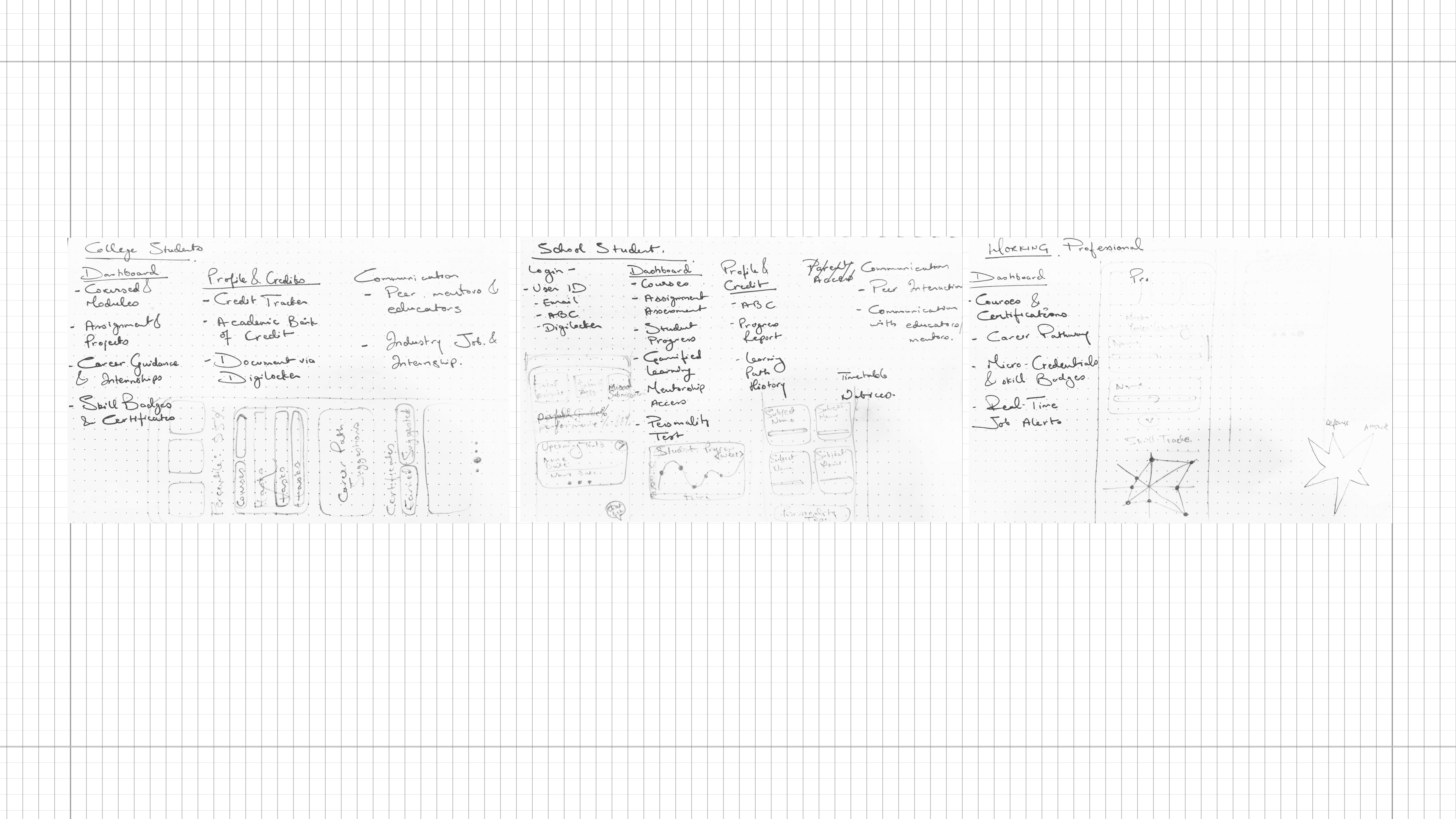
Introducing Professor, a machine learning chatbot designed to transform the student experience. Professor offers personalized career guidance based on personality assessments, bridges the gap between parents and education, and provides multilingual support to cater to rural and diverse users. It simplifies credit and document management, offers real-time answers and guidance, and supports students with disabilities, ensuring accessibility for all. To ensure an effective rollout, we performed an Impact vs. Effort Analysis to prioritize critical features and phase the solution strategically, focusing on the most impactful elements first.
Impact V/s Effort Mapping
Deliver
016
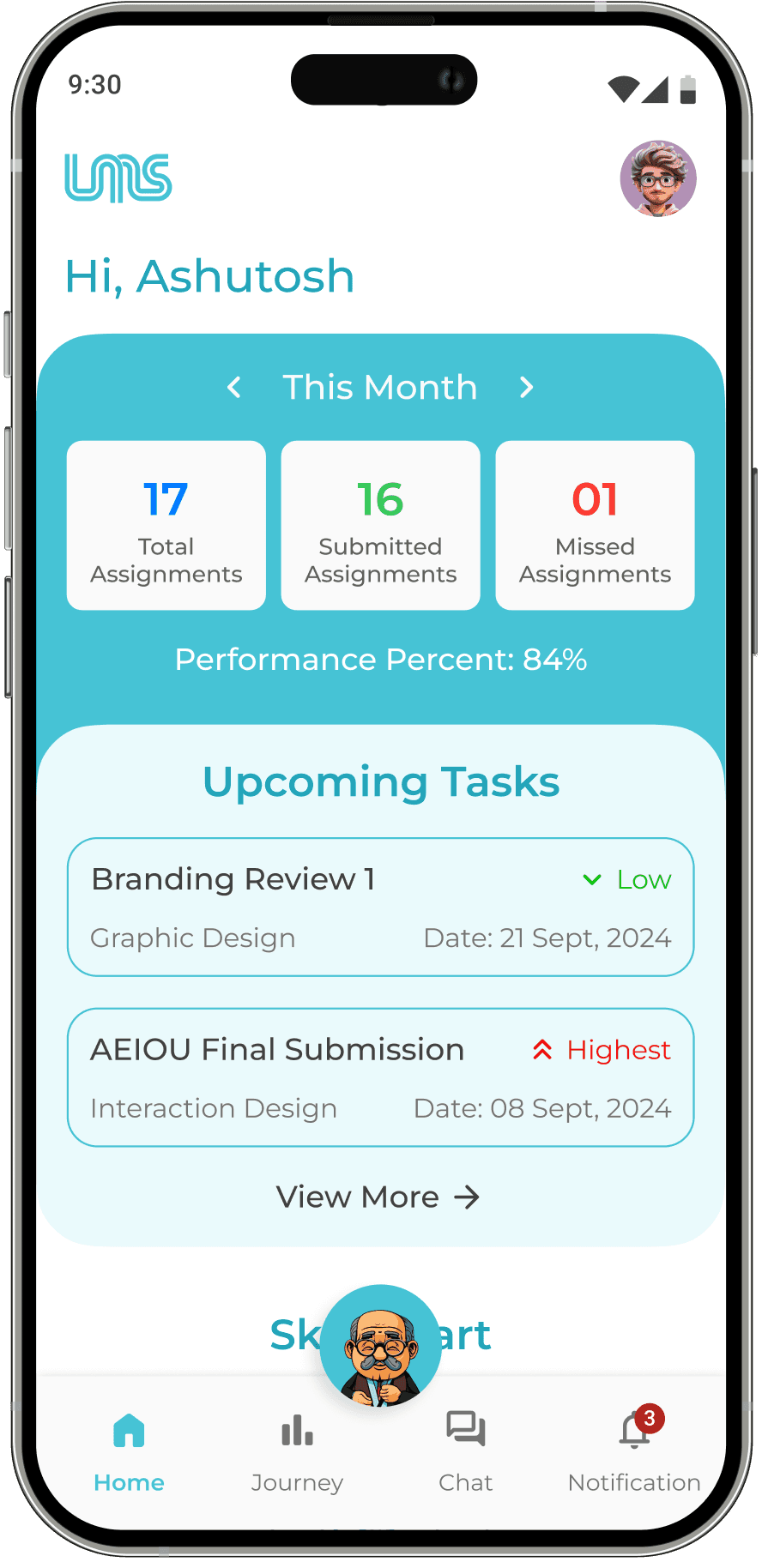
Learning Margdarshan System
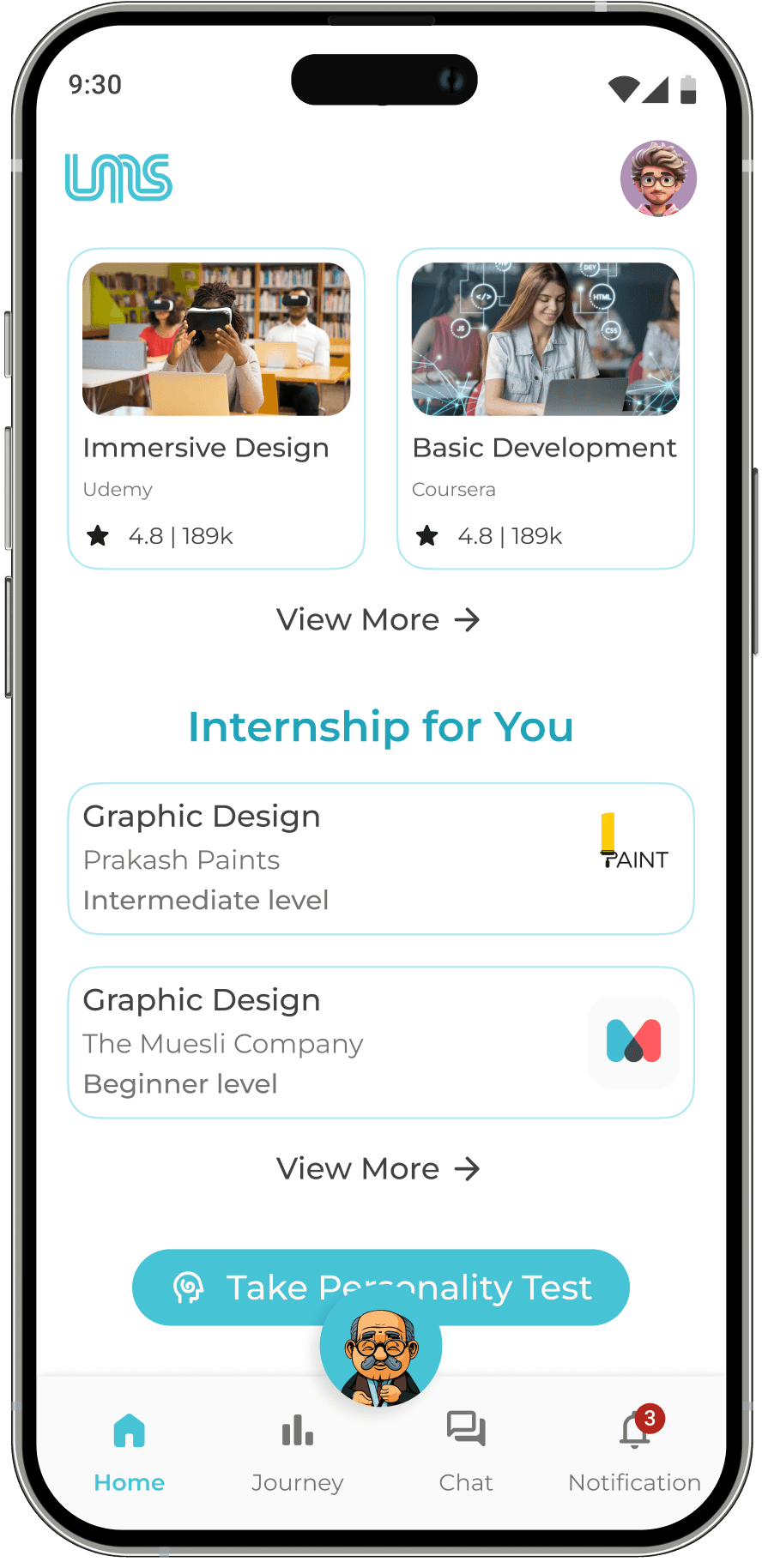
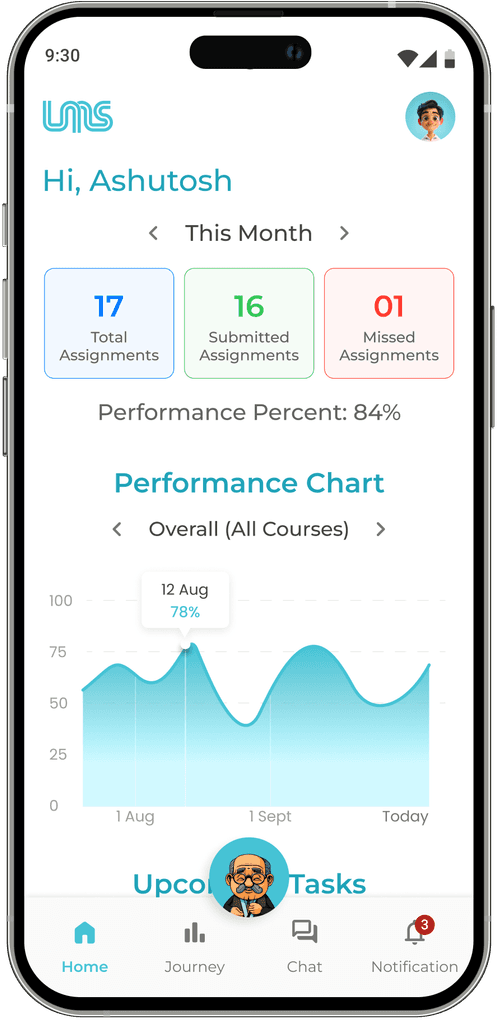
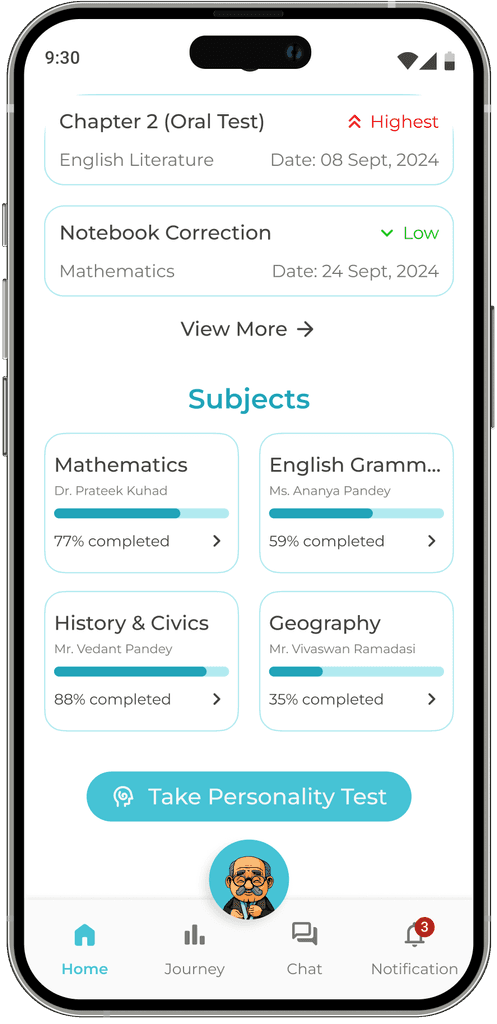
LMS is designed to personalize education through personality tests that guide students based on their evolving interests. It offers multilingual support for rural parents, accessibility for PWD students, and simplifies credit tracking and document management. With both a mobile app and desktop dashboard, the LMS ensures accessibility for all users, recognizing that many, especially in rural areas, primarily rely on mobile devices. This inclusive solution adapts to the needs of every student, providing real-time guidance and career support.
School Students
012
LMS for School Student
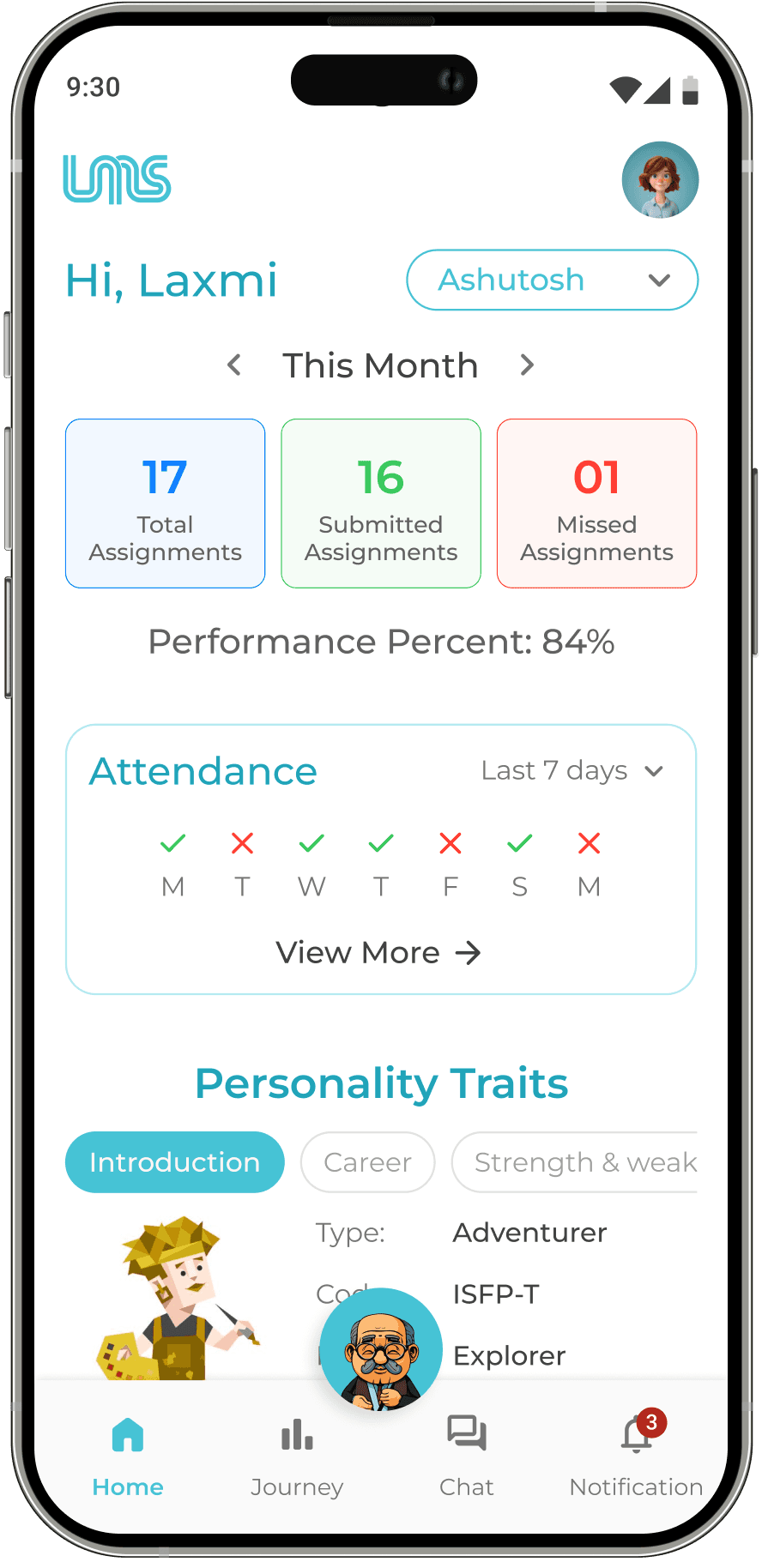
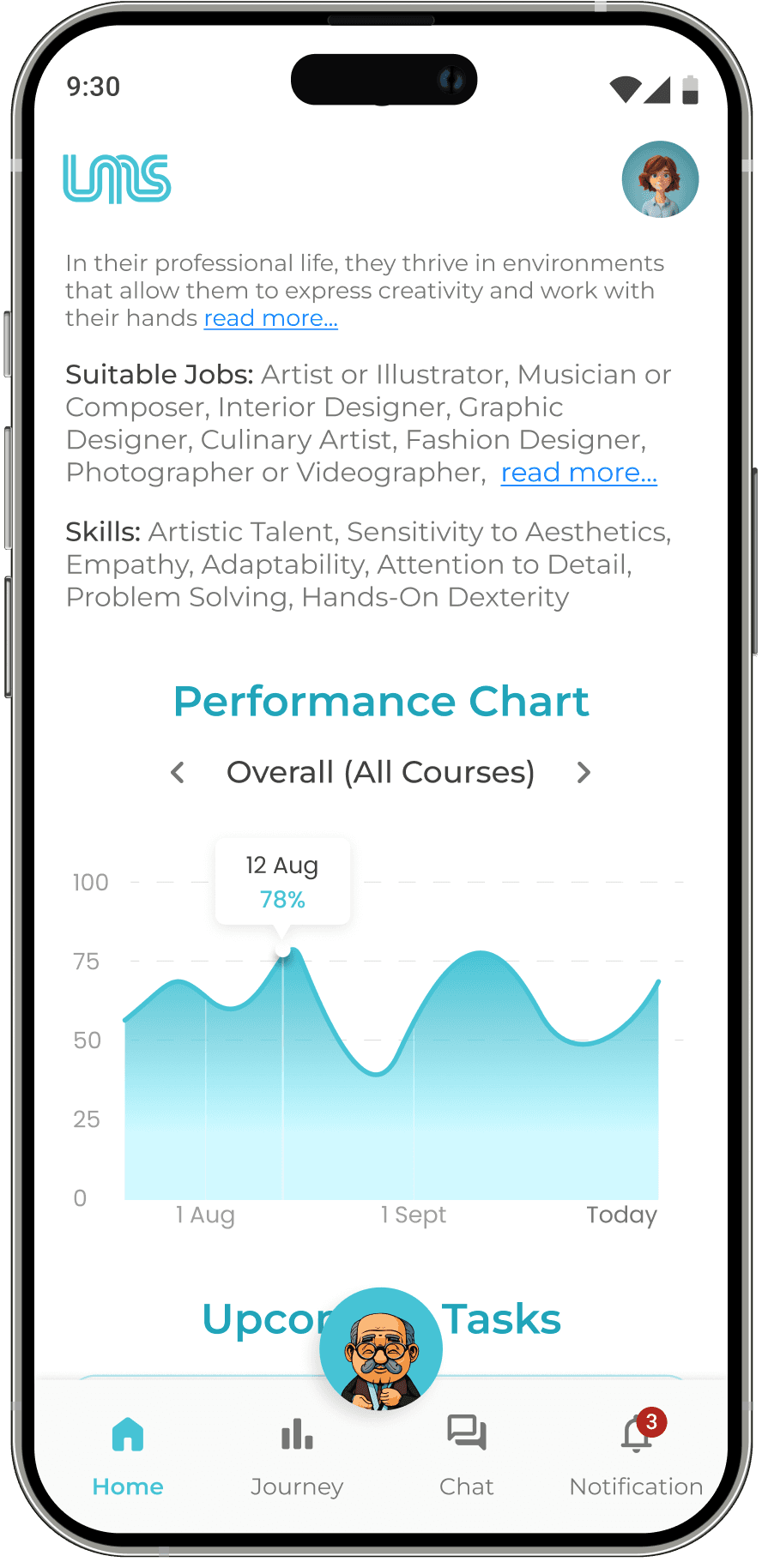
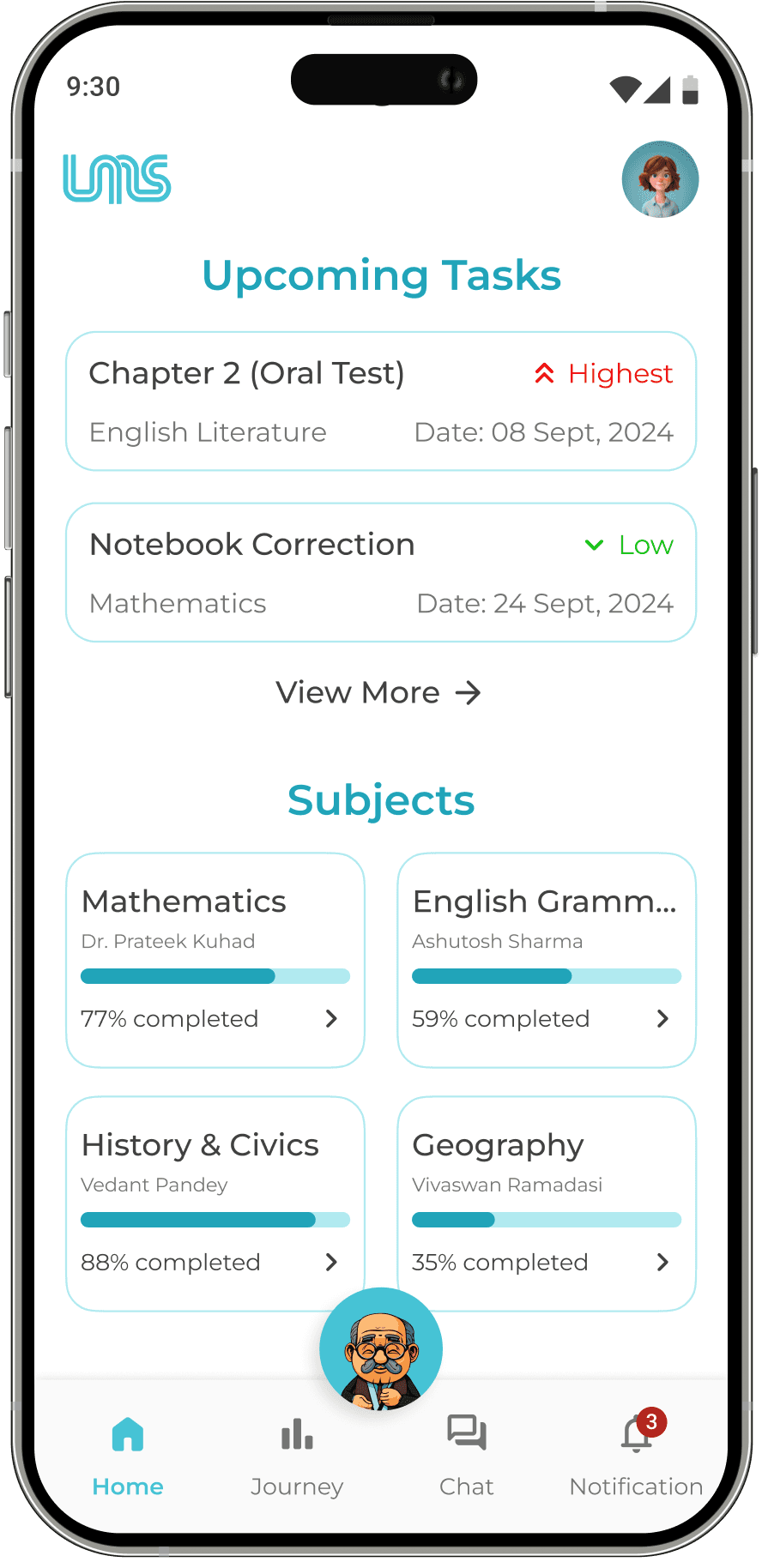
The LMS serves as a personal assistant for school children, providing an overview of their performance, task completion, and enabling them to take personality tests to gain insights into potential careers.
In India, parents are the primary decision-makers during the student phase. Therefore, the platform delivers career-related insights directly to parents, ensuring students stay true to their natural strengths without external influence from the system or others.
Learning Margdarshan System
016
LMS for students
Parents
The LMS for parents provides real-time updates on their child's progress, including results from personality tests that help parents understand their child's values, nature, and potential career paths. It highlights suitable professions and skill-based job opportunities across various fields. Additionally, parents receive daily updates on their child's tasks, teacher feedback, and overall academic performance, keeping them informed and engaged in their child’s educational journey at all times.
School Students
012
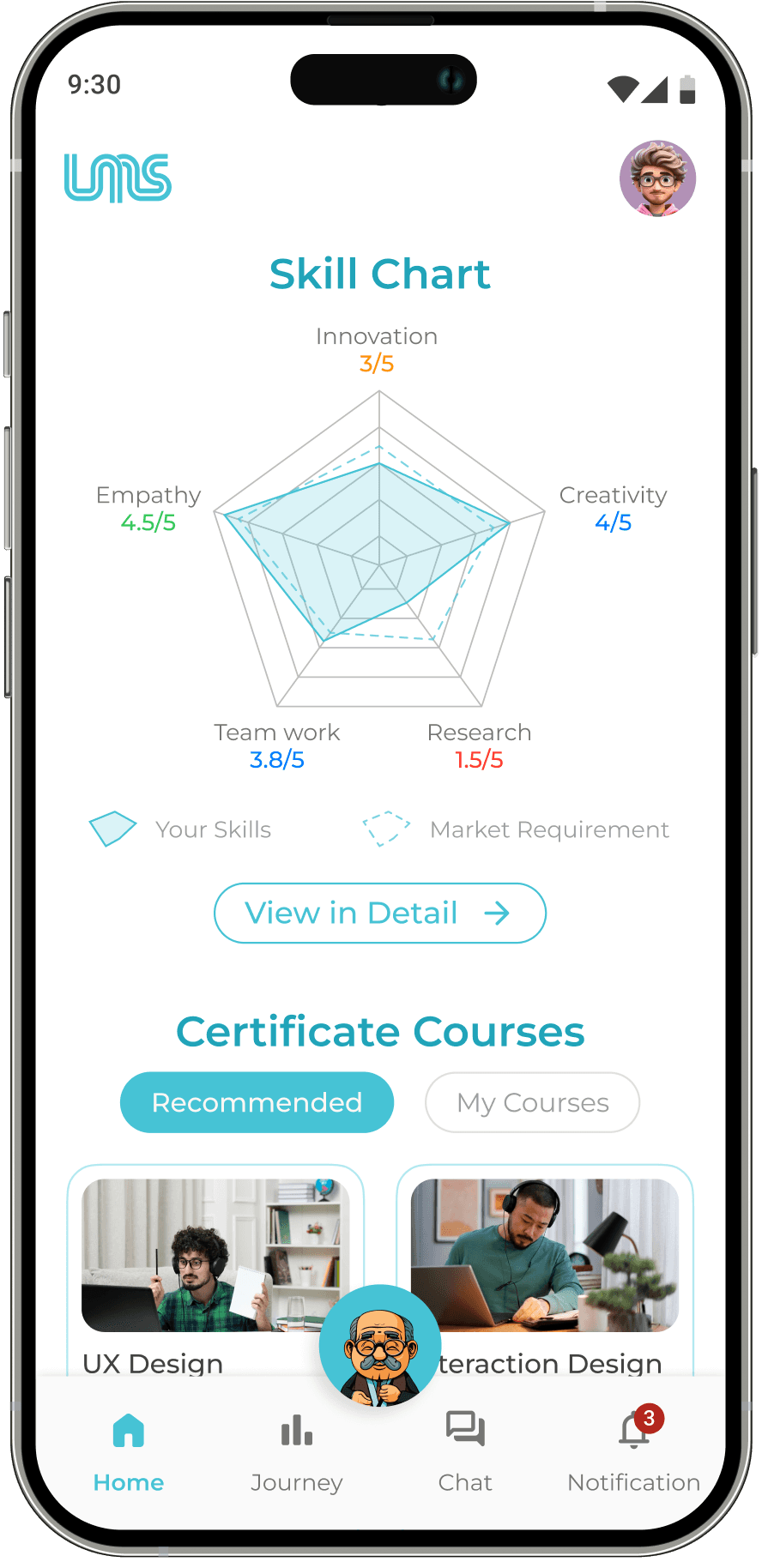
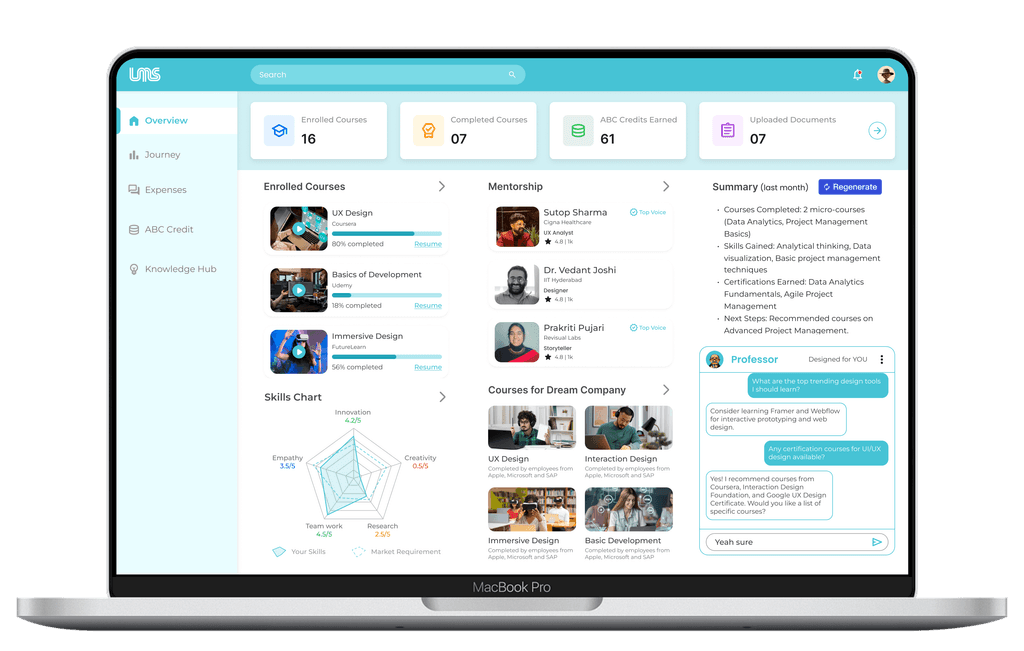
LMS for Wroking Professionals
The LMS dashboard for working professionals offers a personalized experience, displaying key metrics like enrolled courses, completed courses, ABC credits, and uploaded documents. It includes a skill chart highlighting gaps aligned with market needs for landing a dream job, a list of mentors for guidance, and a roadmap of courses to achieve career goals. Users can track their learning progress over time, while the AI-powered chatbot, "Professor," provides real-time information and upskilling recommendations, making career advancement seamless and efficient.